Description:
Market Opportunity
Separation processes are important for the chemical, pharmaceutical, petroleum, electronics, automotive, and aerospace industries, and efficient water reclamation technologies are increasingly needed due to drought, and water shortages. Current separation processes are often energy intensive and incur high operating costs. Membrane technologies offer substantial improvements in energy efficiency leading to economic benefits. However, membranes continue to suffer from fouling, flux decay, poor separation, and low durability.
USC Solution
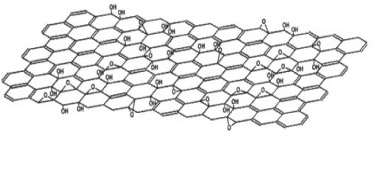
USC researchers have developed a nanocomposite membrane for removal of aqueous contaminants and salts. The membrane was synthesized by incorporating the nano-sized material, graphene oxide (GO) into aromatic polyamide (PA) matrices. The GO-PA and similar composites can serve the entire spectrum of membrane technologies including microfiltration, nanofiltration and ultrafiltration with enhanced water flux and improved fouling resistance and sustainability compared to thin- film composite (TFC) polyamide (PA) membranes, which dominate the current market.
Value Proposition
- Increased and persistent water flux with good reproducibility
- Low energy consumption
- Superior antifouling and rejection properties
- Sustainable operation
Applications
- Wastewater treatment and water reclamation
- Ultrapure water requirements in a number of industries
- Desalination
Publications
1. Optimizing Biomembrane Reactor Systems for Water Reclamation and Reuse Applications, Kim, 2016.
2. Investigation of Mechanical, Thermal and Rheological Properties of Fluorocarbon Functionalized Polystyrene and Development of Increased Flow Graphene Based Polymer Nanocomposite Membranes, Yurdacan, 2015
Stage of Development
- Experimentally validated
- Available for licensing