Description:
Market Opportunity
Lithium-ion batteries play an essential role in modern society, and cheap, rechargeable batteries will be key to continued scaling of electric car and solar farm technology. However, the active materials in many commercial cathode electrodes have poor electrical conductivity. Incorporating carbon additives is one way to improve the conductivity of cathode electrodes. Diesel combustion is a major source of carcinogenic pollution, so sourcing carbon from diesel particulate emissions could both improve battery efficiency and improve sustainability and environmental health.
USC Solution
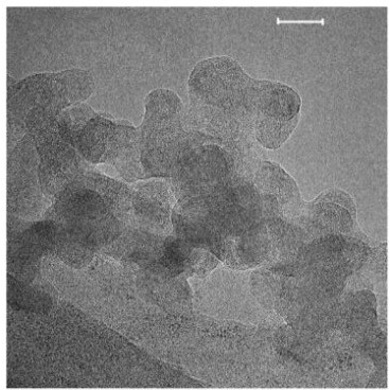
USC researchers have developed a method for capturing and reusing diesel exhaust soot nanoparticles in lithium manganese oxide and lithium iron phosphate cathodes. High-temperature annealing removes residual organics and unburned hydrocarbons to produce highly porous amorphous carbon with a large surface-to-volume ratio. Research shows composite electrodes containing these particles perform comparably to electrodes with commercially available activated carbon (i.e., Super P®).
Value Proposition
- Repurposing an abundant toxic pollutant
- Improved efficiency of Li-ion batteries
- Comparable performance to current market options
- Sustainable resource use
Applications
- Household devices
- Electric cars
- Solar farms
Publications
Recycling diesel soot nanoparticles for use as activated carbon in Li ion batteries, Yang et al., 2021.
Stage of Development
- Prototype developed
- Tested
- Available for licensing