Description:
Background
Advancements in gene editing have revolutionized biomedical research and therapeutic development, yet current methods lack precise, non-invasive control over gene expression in living organisms. Conventional gene modulation approaches, including chemical inducers and viral vectors, often result in systemic effects, off-target activity, and invasive delivery requirements. These limitations pose significant challenges for therapeutic applications, particularly in targeting localized disease sites such as tumors or neurological tissues.
Achieving spatial and temporal precision in gene editing is crucial for therapeutic applications. Existing solutions struggle to modulate gene activity with high specificity in deep tissues, limiting their potential for controlled therapeutic interventions. A technology capable of remotely triggering gene expression with high precision, without invasive procedures, would mark a significant breakthrough in the field.
Technology Overview
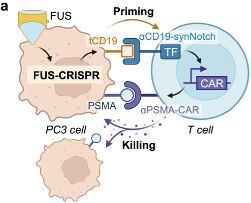
This technology integrates focused ultrasound with CRISPR-based gene editing to enable remote, non-invasive genome and epigenome modulation. The system uses focused ultrasound to generate localized hyperthermia, activating heat-inducible promoters that control CRISPR machinery. This approach allows precise spatial and temporal regulation of gene activation, repression, or knockout without systemic drug delivery or invasive procedures.
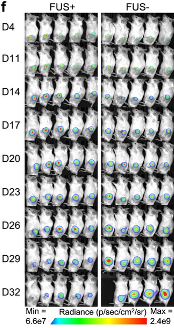
By leveraging CRISPR activation (CRISPRa), interference (CRISPRi), and gene knockout (Cas9), the platform provides fine-tuned genetic control in targeted tissues. The technology has been successfully employed to disrupt telomeres in tumor cells, inhibiting proliferation and enhancing susceptibility to complementary treatments such as CAR-T therapy. Real-time thermal feedback ensures controlled activation, preventing off-target effects and optimizing therapeutic outcomes. The system’s ability to regulate gene expression in deep tissues with high specificity distinguishes it from conventional gene editing technologies.
Benefits
- Remote, non-invasive gene modulation enables precise therapeutic control without invasive procedures.
- Spatial and temporal regulation minimizes off-target effects and systemic exposure.
- Integration with CRISPRa, CRISPRi, and Cas9 allows diverse genetic interventions, including activation, repression, and knockout.
- Real-time thermal feedback enhances targeting accuracy and safety.
- Demonstrated efficacy in oncology, particularly in telomere disruption for tumor inhibition and synergistic therapy enhancement.
Applications
- Targeted cancer therapies, including tumor suppression and immune system sensitization.
- Neurological disease research and treatment through precise gene regulation in the brain.
- Regenerative medicine for controlled tissue repair and stem cell differentiation.
- Fundamental research in gene expression, disease modeling, and developmental biology.
- Gene therapy for localized genetic disorders requiring precise modulation
Publications
https://www.nature.com/articles/s41467-024-54477-7